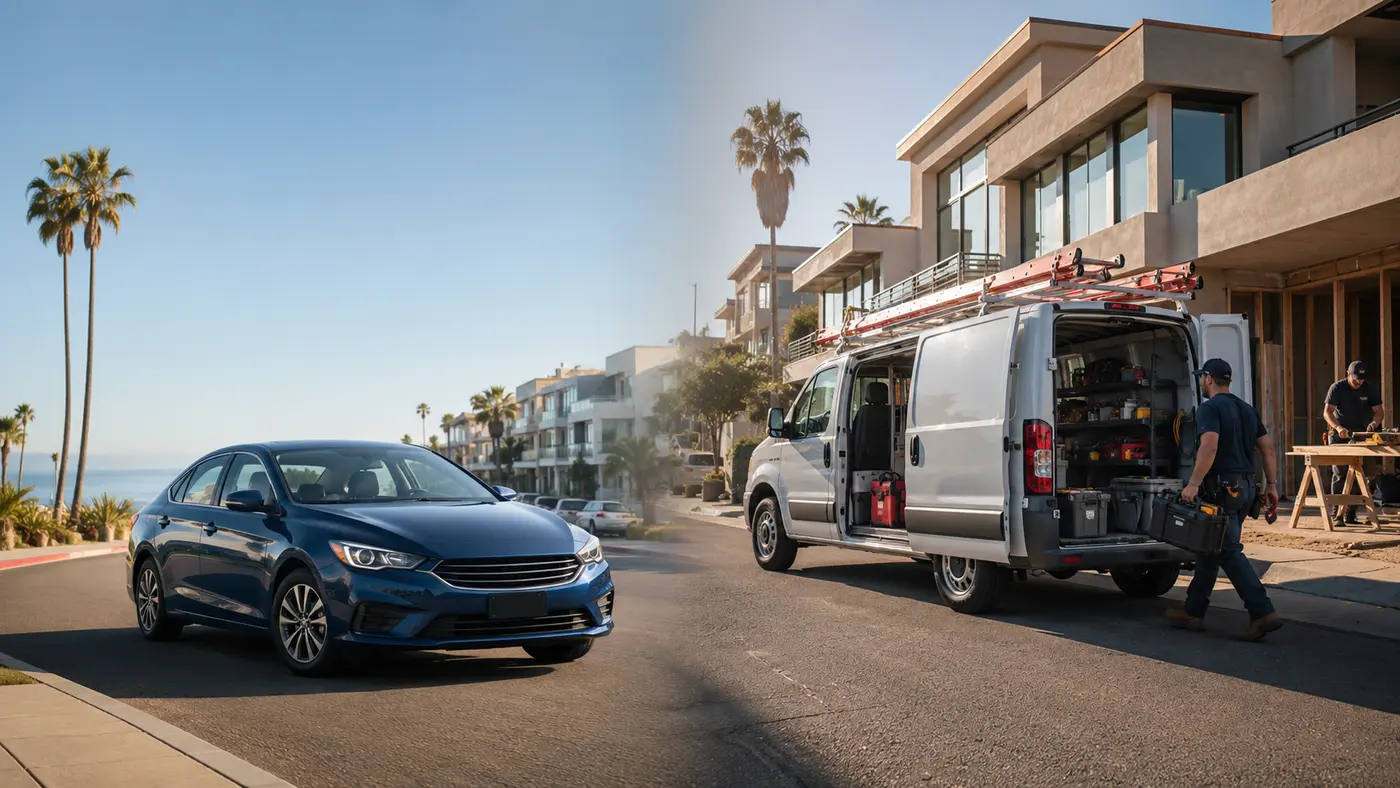
A business may need commercial auto insurance when it owns the vehicle, employees drive it, or it is regularly used for deliveries, paid transportation, tools, equipment, or goods. Insurers may treat commuting or an occasional business errand differently. The right policy depends on ownership, use, drivers, vehicle type, contracts, and policy terms.
Personal and commercial policies are built for different exposures
Personal auto insurance is generally designed for individuals, household drivers, and private use. Commercial auto addresses business vehicle risks. Depending on the coverage and covered-auto symbols, a business auto policy may cover specified business-owned, hired, or non-owned vehicles.
Commercial auto is not simply personal auto at a higher price. A business may need liability, physical damage, uninsured motorist, hired-auto, or non-owned-auto coverage. No package automatically covers every vehicle or activity.
Signs your business should request a commercial-auto review
Ask for a review if a business owns the vehicle, employees drive it, it makes frequent deliveries, transports people for pay, carries substantial tools or inventory, tows for work, or a contract requires commercial-auto limits.
When an employee uses a personal car for work, the business may need hired and non-owned auto liability. That coverage generally protects the business’s liability interest. It does not replace the employee’s personal policy or automatically cover damage to the employee’s car.
Rideshare, food delivery, courier work, and paid transportation require special attention. Personal policies may exclude business or livery use. Tell the insurer when the app is on, what you transport, and what coverage the platform provides.
Insurance classification and DMV registration are not identical
California DMV defines “commercial vehicle” for registration purposes. Insurance underwriting uses policy definitions and actual risk information. A DMV registration classification alone does not determine whether a personal or commercial policy covers a loss.
Likewise, commercial auto insurance does not automatically satisfy every DMV, motor-carrier, permit, filing, or contract requirement. Larger vehicles, passenger transportation, hazardous materials, and interstate operations may face added rules.
A practical contractor scenario
Suppose an electrician owns a pickup personally, uses it daily at job sites, carries tools, and sometimes lets an employee drive. The owner should disclose the title, use, equipment, travel radius, drivers, and contracts. A commercial policy may be appropriate. Undisclosed use can create eligibility or claim problems.
What to gather before requesting a quote
Collect each vehicle’s registration and VIN, ownership or lease details, garaging address, travel radius, mileage, use, equipment, driver information, loss history, and contract limits. Disclose trailers, attached equipment, deliveries, passengers, employee vehicles used for work, and vehicles the business rents or borrows.
Have questions about your insurance options or requirements? Call or text Street Smart Insurance Solutions at (714) 736-9048. Our team can assist you in English or Spanish.
Official Sources
When you are ready, start with our commercial auto insurance. Related reading: food truck insurance, workers’ compensation basics, and DMV insurance rules.
Be the first to ask a question.